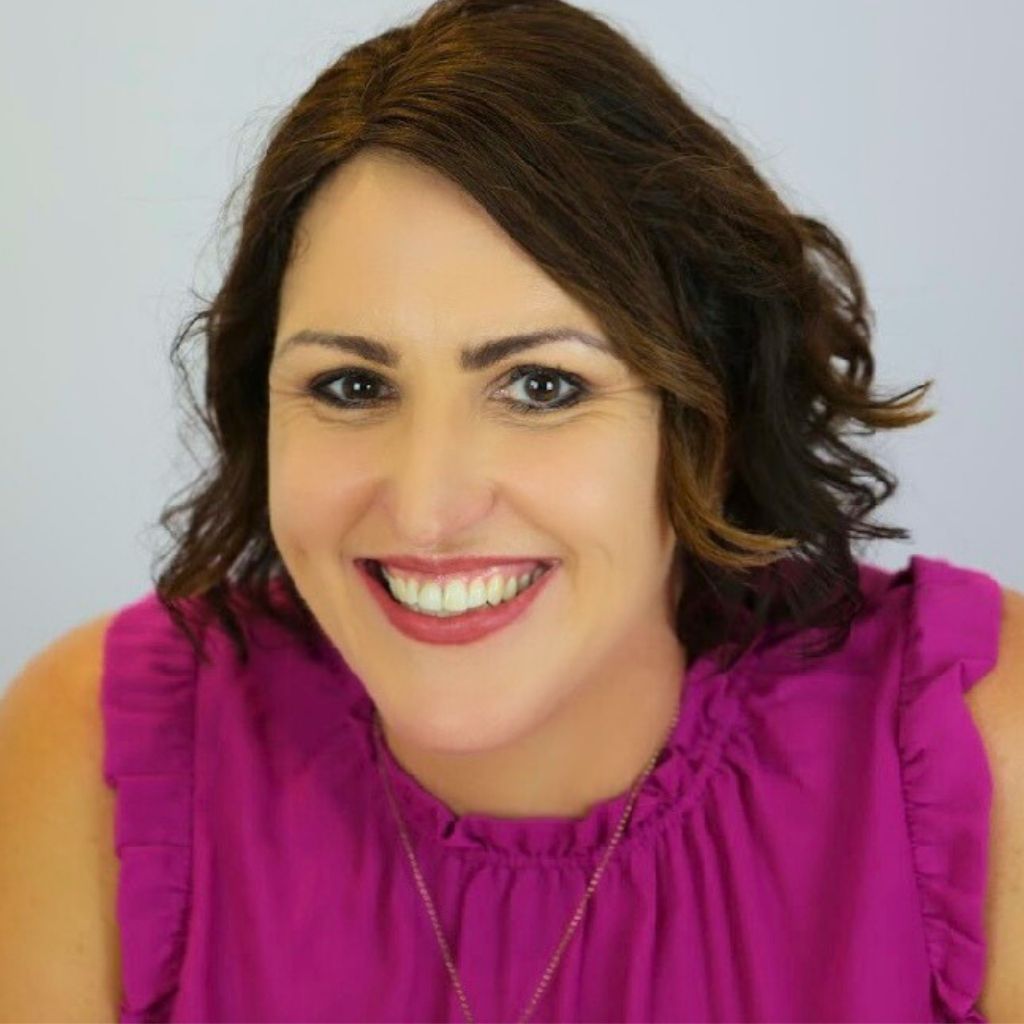
What It Actually Means to Think Like an Author CEO
If you're serious about building an author career — not just finishing a book, but actually turning your writing into a sustainable business — this episode is going to change how you think about everything.
I've written ten novels, built Serenade Publishing from the ground up, and spent years coaching women fiction authors through the publishing decisions that make or break a long-term career. And the single biggest difference I see between authors who build something lasting and authors who stay stuck? It's not talent. It's not even hard work. It's how they think about their books.
In this episode, I'm sharing the Author CEO mindset — the framework I've used in my own career and that I now teach inside The Author CEO Private Mentorship — including three specific mental shifts that will change how you approach every publishing decision you make from here.
In this episode we cover:
Why your books are employees — and what it means to give each one a job description
The self-publishing strategy question most authors never ask (and why it's costing them)
How to make money as an author beyond royalties, and why your back catalogue is your most underused asset
The ideal reader clarity practice that changes your book marketing, your covers, your content, and your income
Why publishing rights are a wealth decision, not just a contract detail
The money mindset shift that women authors are rarely given permission to make
How manifestation and business strategy work together — and why you actually need both
This episode is for you if:
You're a fiction author who wants to build a real, financially sustainable writing career
You've been self-publishing or considering it, and you want a clear strategy — not just more information
You feel like you're making publishing decisions in the dark and you're ready for that to change
You want to understand how indie authors actually build passive income from their books over time
You're done treating your writing like a hobby and ready to run it like a business
Resources mentioned:
The Author CEO Private Mentorship — 4 months, 1:1, for women authors who are ready to build strategically: serenadepublishing.com/the-author-ceo
Connect with Sarah:
Website: serenadepublishing.com
Instagram: @sarahwilliamsauthor
The Write Podcast: serenadepublishing.com/thewritepodcast
If you enjoyed this episode, please subscribe and leave a review — it helps other women fiction authors find this podcast and the support they've been looking for.
I want you to think about your books for a second.
Not as stories. Not as something you poured your heart into — although you did, and that matters.
As employees.
Each one has a job. Each one is on your payroll. And the question I want you sitting with for the next twenty minutes isn't whether you love them. You do. That's not in question.
The question is: are they working?
Because here's what I've learned from writing ten novels, building a publishing company from the ground up, and coaching women who are deeply talented and genuinely unclear about what they're actually building...
The writers who create real, lasting, financially sustainable careers are not the ones who love writing the most.
They're the ones who think about their writing like a CEO thinks about her business.
And that is exactly what we're talking about today.
Before I go any further, I want to be clear about what this episode is not.
It's not about hustle. I don't use that word and I don't believe in what it represents.
It's not about becoming a brand machine or turning something you love into something that feels like a grind.
It's not about caring less about the craft. If you know anything about me, you know I take the writing seriously. That never goes away.
What this is about is a way of thinking. A lens. And once you have it, you genuinely cannot unsee it.
It changes how you look at every decision you make as an author. Your publishing path. Your release schedule. Your pricing. Your back catalogue. Even the next book you choose to write.
I've been thinking this way for as long as I've been a writer. And for a long time, I didn't realise it was unusual. I just thought everyone approached their books this way.
They don't.
So today I'm going to share three specific mental shifts that separate authors who build careers from authors who just finish books. And I want to tell you where this really comes from for me, because it's not just strategy. It never has been.
I've been interested in the Law of Attraction for as long as I can remember.
And before you think that has nothing to do with author business strategy, stay with me. Because I think it has everything to do with it.
When I first started taking my writing seriously, I wasn't just thinking about finishing a book. I was already holding a vision that was much bigger than that. A publishing company. A catalogue of work. Books that kept earning. Income that came from my creativity, not from someone else's schedule or someone else's ceiling.
I didn't know exactly how it was going to happen. I just knew, in that quiet, certain way that's hard to explain to someone who hasn't felt it, that it was going to. And that knowing changed how I made decisions from the very beginning.
Because when you genuinely believe you're building something long-term, you stop making short-term decisions.
There's a moment I come back to a lot. I was thinking about Serenade Publishing, not as a name for my own books, but as an actual company. A real publishing house. At the time, I hadn't published ten novels. I didn't have a team or a festival or a mentorship programme. But I was thinking about it as if all of that already existed, because in my mind, it did.
That is not delusion. That is how manifestation actually works when you combine it with strategy.
I journaled on that vision. I held it. And then I made decisions that were aligned with it, even when those decisions were harder or slower than the alternative.
When I sat down to think about Brothers of Brigadier Station, for example, I made a deliberate choice. That book became my free reader lead magnet. Not because it wasn't good enough to sell, but because I understood what I needed it to do. Its job was to be the door. To bring the right readers in. To let women find me before they'd ever spent a cent.
That is not an accident. That is an Author CEO decision.
And it came from already knowing, years before the evidence showed up, what I was building.
I tell you this because I want to be honest about where the CEO mindset actually comes from. It's not a framework I read in a business book. It grew out of belief. Out of choosing, repeatedly, to trust the vision even when I couldn't see all the steps yet.
Manifestation without strategy is just wishing. Strategy without belief is just exhausting. You need both. And in my experience, the belief has to come first.
So. Three shifts. Let's go into them.
And I want you to actually think about these as I share them, not just listen. Notice where you already do this. Notice where you don't. Because the noticing is where things start to change.
Shift One: From "finishing a book" to "building a catalogue."
A hobby writer's goal is to finish the book. And I mean that with genuine respect, because finishing a book is hard and it deserves to be celebrated.
But an Author CEO's goal is to build a body of work. A portfolio. Something cumulative and deliberate, where each piece connects to the next.
Here's the question I want you asking about every book you write or plan to write:
What is this book's job?
Not "is it good?" It's good. That's not the question.
Its job. What is it doing in your business?
Some books are lead generators. They're the door, like Brothers of Brigadier Station is for me. Free, or deeply discounted, or the first in a series. Their job is to find your reader and bring her in.
Some books are your income drivers. They're doing the heavy financial lifting. They're the titles people go back to, that sell quietly and consistently for years.
Some books are brand builders. They're the ones that get you seen differently. That position you in a specific space with a specific kind of reader. That open doors you weren't expecting.
Songbird was a brand builder for me as much as anything. Taylor Swift-inspired, small-town cowboy romance with a protagonist who's a recovering alcoholic, with that level of emotional depth and high-stakes drama I love in soap operas. That book said something very specific about what kind of romance author I am. It positioned me clearly and intentionally.
Heartbeat Song, the sequel, its job is partly to serve the readers who fell in love with Songbird and need to know what comes next, and partly to deepen the series as an asset. Every book that adds to a series increases the value of every other book in it. That's a catalogue decision, not just a story decision.
I knew what each of those books was for before I published them.
And if you can't answer the question "what is this book's job?" right now, that's not a failure. It's just information. It means that conversation hasn't happened yet.
Shift Two: From "hoping people find me" to "understanding how readers actually move."
This is the one I see trip up genuinely talented writers more than almost anything else.
You write a beautiful book. You put it out into the world. And then you wait. And you hope. And the hoping feels like enough, because the book exists. It's available. What more can you do?
A lot, actually. But more than that, you can stop leaving it to chance.
Getting clear on your ideal reader is not a marketing exercise. I want you to hear that. It's not about writing to a formula or optimising for an algorithm.
For me, it's actually a spiritual practice.
My reader is not a demographic. She's a real person to me. She’s a busy mum who needs a way to escape the daily grind and she finds that in my books.
She is, in a lot of ways, me. Which makes sense. We write for the reader we once were.
When I got clear on who she was, and I mean really clear, not just "women who like romance" clear, everything changed. My covers made sense. My emails to my list felt like letters to a specific person, not broadcasts into the void. My Instagram content stopped being something I had to think about and started being something I just knew.
She finds me because I know her.
And that knowing didn't come from a spreadsheet. It came from getting quiet and actually sitting with the question. Letting the answer arrive rather than forcing it.
That is where strategy and intuition meet. And in my experience, that intersection is where the most powerful decisions get made.
Shift Three: From "royalties" to "assets."
This is the money mindset shift. And I want to talk about it directly because I think there is so much shame and confusion around money in the writing world, and it holds talented women back in ways that genuinely frustrate me.
We are taught, almost from the beginning of our writing lives, that caring about money makes you less of an artist.
That if you're a real writer, you do it for the love, not the income.
And I want to say as clearly as I can: that is one of the most damaging stories the creative industry tells women. And we have believed it for too long.
You are allowed to want a financially sustainable creative life.
You are allowed to look at your books and ask: how is this going to work financially? What can this earn? What am I actually building toward?
That is not selling out. That is being a grown woman who has decided to take her work seriously.
Royalties are income. Assets are wealth. Most authors think obsessively about the former and completely ignore the latter.
Your back catalogue is an asset. Every book you've published that continues to sell without you actively working on it, that's passive income. That's your business working while you sleep.
Your reader list is an asset. It's a direct relationship with people who have said, yes, I trust you, I want to hear from you. That is irreplaceable. That is something no algorithm can take away.
Your publishing rights are an asset. What you keep, what you license, what you never hand over, those are wealth decisions. They compound over time.
When I make any publishing decision, I'm always asking: what am I protecting? What am I building on?
The decision about how and where you publish your books isn't just about royalty percentages. It's an asset question. It's about who owns the relationship with your reader. It's about what you're building toward.
I hold my rights carefully. That is a money mindset. That is an abundance mindset. It's the understanding that my creative work has long-term value, and that value deserves to be protected and grown, not given away because I wasn't thinking far enough ahead.
Your books are employees. And a good employer thinks about the long game.
I want to tell you about a decision I made that sits right at the intersection of all three of these shifts.
When I created The Author CEO Private Mentorship, it wasn't because I saw a gap in the market, at least not in the way that sounds.
It was because I had lived that gap personally.
When I was building my career, genuinely trying to figure out how to do this, how to make writing financially sustainable, how to think about publishing as a business, how to hold the vision and also make strategic decisions, I looked for someone to work with one-on-one. A mentor who had actually done it. Someone who understood both the craft and the business. Someone who could help me think through the whole picture, not just the writing.
I couldn't find her.
There were courses. There were communities. There were coaches who specialised in one thing or the other. But the person I actually needed, the one who would sit with me and think through my specific books, my specific career, my specific vision, she didn't exist in a form I could access.
So I decided that if I ever got to a place where I could be that person for someone else, I would.
That is the origin of The Author CEO. It is the mentor I needed and couldn't find. And every woman who applies, I read her application personally, because I know what it feels like to be looking for that and not finding it.
Building that programme was a long-term decision. It was also a business asset decision. It took time to build the offer, to structure the four months, to create The Vault. It would have been faster and easier to just run another course.
But I wasn't thinking about fast and easy. I was thinking about what I actually wanted to build. And I was trusting, the way I always have, that if I built the right thing with the right intention, the right women would find it.
They have.
Here's what I'd like you to do this week. Not a big task. Just one question.
Look at your books, or your book, if you only have one right now, and ask:
What is its job?
Not "do I love it?" You love it. That's given.
What is it doing? Or what do you need it to do?
Is it the door that brings readers in? Is it anchoring a series? Is it sitting there, finished and beautiful, without a clear role in the bigger picture of what you're building?
And if you can't answer it, please don't spiral. I'm not trying to make you feel like everything is wrong.
If you can't answer it, that's information. It means the strategy conversation hasn't happened yet.
So sit with it. Journal on it. Let the question do its work.
Because this is how the Author CEO mindset actually develops. Not from reading about it. Not from a podcast episode, even this one. But from asking better questions about your own work and being willing to hear the answers.
Before I let you go, I want to say something I mean completely.
Thinking like an Author CEO does not mean thinking like someone who has stripped the joy out of writing.
It means taking your writing seriously enough to protect it. To build around it. To give it the best possible chance of becoming the life you actually want.
You are not doing your creative work any favours by pretending the business side doesn't exist. And you are not being more of an artist by refusing to think about money or strategy or the long game.
You're just staying small. And small is not where you're meant to be.
Now, if you've been listening to this and something in you is saying "I don't actually know what job my books are doing, I've never thought about it this way"... that is the work we do inside The Author CEO Private Mentorship.
It's one-on-one. It's four months. And it's built entirely around your books, your career, and the vision you have probably been holding quietly for longer than you've admitted to anyone.
We do the strategy. We do the mindset. We do the money conversations. We build the publishing roadmap. All of it.
If that sounds like what you've been looking for, you can find out more and apply at serenadepublishing.com/the-author-ceo.
I read every application personally. I only work with women I genuinely believe I can help. And if that's you, I would love to hear from you.
Thanks for joining me today and I’ll see you again next week on The Write Podcast.